
Installation can feel like the final task in a planning notice job. For the application itself, however, it is usually one step in a wider public-notification process.
Once a site notice is installed, the applicant and planning consultant should continue tracking the authority's instructions and keep the correct records available.
Confirm the installation
Check that the installed notice matches the approved document and that the installation report identifies the correct property. If the photographs are unclear, request clarification promptly while a return visit may still be practical.
Keep the actual attendance date, not merely the booking date.
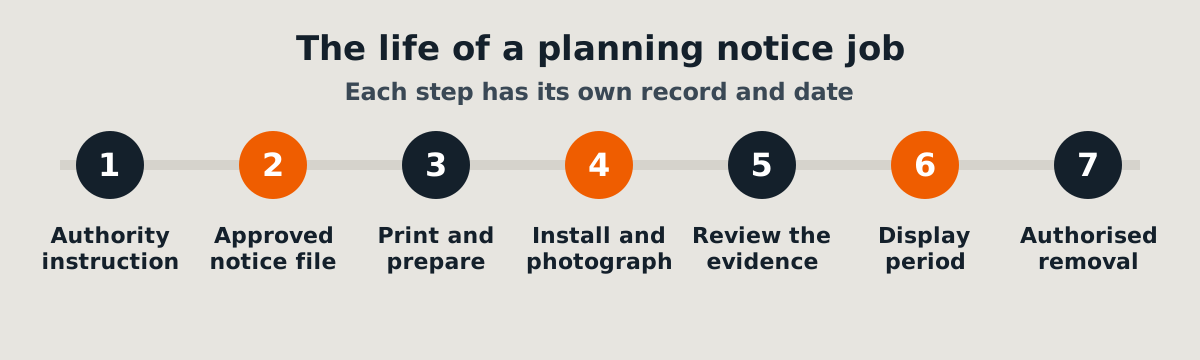
Maintain the required notice process
The display period and any monitoring requirement should follow the authority's directions. If the notice is damaged or removed unexpectedly, notify the appropriate person managing the application and seek guidance on what action is needed.
Where letters or newspaper advertising are also required, track those tasks separately. Completion of a site visit does not demonstrate completion of every required notification method.
Understand public submissions
The purpose of advertising is to allow potentially affected people to inspect the proposal and make a submission. The responsible authority then considers relevant submissions through its planning assessment process.
A field contractor should not promise that a successful installation means the planning permit will be granted or that no objections can be lodged.
Final declarations and removal
At the end of the required process, the authority may request a statutory declaration or supporting documents. These must reflect what actually occurred. Check who is authorised to remove the notice and whether a final attendance record is needed.
Keep the project file complete
An organised file might contain the original advertising instructions, the approved notice, installation photographs, relevant correspondence, any incident or reattendance record and the final authorised removal evidence.
That makes it easier for applicants and consultants to answer a later question without reconstructing the process from memory.
Need a documented site visit? SiteNotice Australia can quote for agreed notice-related field tasks when you provide the current application instructions.
Related: Planning notice installation · Request a quote