
A planning application does not always lead straight from lodgement to a decision. Depending on the proposal and the planning scheme, the responsible authority may require public notice so potentially affected people have an opportunity to examine the application and respond.
For applicants, architects and town planners, the important practical question is not just whether advertising is required. It is how each instructed step will be completed, documented and followed up.
What does planning notice advertising mean?
In Victoria, notice of an application can take several forms. The authority may require letters to nearby owners or occupiers, one or more notices displayed on the subject land, newspaper notices, or another specified method. The particular combination is determined for the application; a website guide cannot replace the written directions issued by the authority.
A site notice is intended to make the application visible to people passing the land. It is not a building-site advertising banner and should not be redesigned simply to suit a contractor's branding. The approved notice text and display instructions matter.
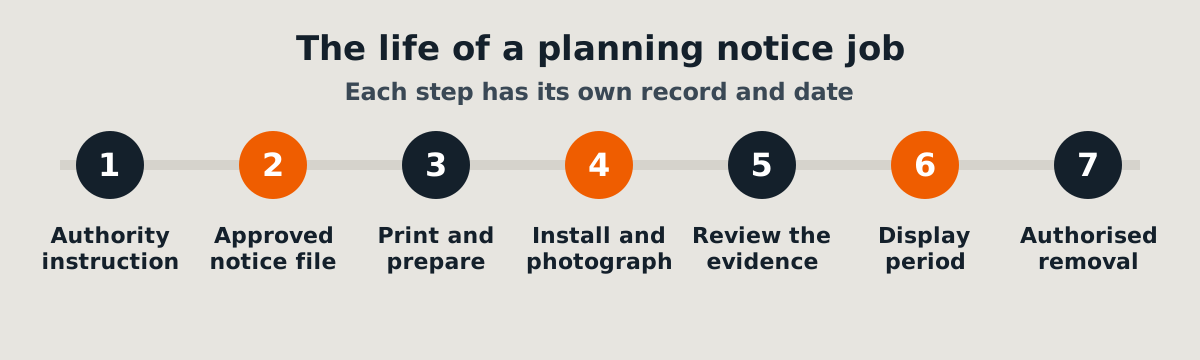
A practical sequence to follow
First, obtain the authority's advertising request and check who has been assigned each action. Some councils arrange mail-outs themselves; others require the applicant to carry out particular tasks. Next, confirm the correct site address, any relevant street frontages, the approved notice document and the display dates. If a sign must be produced, check the final proof before printing.
Arrange installation early enough to allow for access restrictions or a replacement if something goes wrong. After attendance, collect dated photographs that show the notice itself and its position at the site. Keep those records with the planning application reference so they can be supplied when requested.
Finally, track the instructed display period and ask the authority what is required at the end. Depending on the matter, that might include a declaration or other evidence and a separate instruction about removing the sign.
What usually causes delays?
Common operational problems include an outdated notice, an incorrect address, unclear instructions about which frontage to use, restricted access, poor installation photographs and assuming the display period has finished without checking the authority's directions.
A short pre-installation check can prevent a surprisingly long email trail later.
Planning an installation? Send SiteNotice Australia the property address, authority instructions and notice document to request a quote for the relevant field work. We can confirm scope and availability before booking.
Related: Planning notice installation · Request a quote